Nuestra América: 30 Inspiring Latinas/Latinos Who Have Shaped the United States by Sabrina Vourvoulias
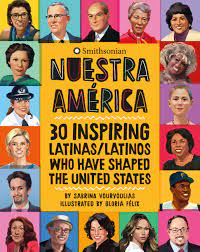
Like any nonfiction books on the subject of role models and inspiring people, this book provides mini biographies on some famous and some lesser known figures that shaped or changed history through their accomplishments. The standard latinos are present such as Lin Manuel Miranda and Sandra Cisneroes, Cesar Chavez and Dolares Huerta etc. I want to present some new ones I’ve learned from this book.
-Luis Walter Alveraz who had twenty two patents from optical devices to a golf training machine for President Eisnhower, was also part of the Manhatten Project to develope the atomic bomb and then awarded the 1968 Novel Prize for Physics in discovering several subatomic particles in liqued hydrogen. He was also the mastermind of other experiments like using cosmic rays to find Egyptian chambers under the pyramids and correctly theorizing that meteors killed dinosaurs years before it was confirmed.
Jaime Escalante-The inspiration for the hit film Stand and Deliver, Escalante was a passionate teacher with unique techniques promoting hands-on lerning with music, remote controlled toys and intense weekend drilling. But with his dedication he got his class of minority and disadvantaged kids to ace the SATs (to the point the College Board thought they were cheating) and encouraged them to dream big despite the obstacles and prejudices of others.
Macario García-A Staff Sergeant in WWII, he performed many courageous deeds for his country (with several prominant medals like the Purple Heart, and a Medal of Honor) but was denied service at a resturaunt because he was Latino. He continued to fight for his rights and rights of other Latinos and became a counselor in the Department of Veteran Affairs.
Sylvia Mendez-The Civil Rights activist who people should know was part Thurgood Marshall’s inspiration for Brown vs Board of Education. In 1943, Latinos were segregated from the better funded and better staffed white schools in California. The Mendez family was not going to accept this substandard quality of education and fought in court (Mendez v. Westminster), leading to Sylvia being one of the first children to integrate the schools. She continued to fight discrimination in her adulthood, speaking to universities and legislators about the history of her court case and was even awarded the Presidential Medel of Freedom by Obama.
Pura Belpré-The first Latina librarian on the mainland, Belpre not only encouraged a love of reading in millions of kids with her storytimes and puppet shows but also brought Puerto Rican folklore to literature when she noticed the lack of Spanish books on shelves. She wrote her own retellings of traditional Puerto Rican folktales, arranged Diego Rivera to lecture, celebrated Latino feast days and overall, added to the world of literature and libraries. Now there’s the Pura Belpre Award marking the books of honored Latino works.
What sets this book apart from other nonfiction is that this was done in collaboration with the Molina Gallery and the Smithsonian Latino Center. The book offers thoughtful questions for critical discussion and thinking regarding themes of the book and patterns throughout history. It also has a QR code that leads to the virtual Smithsonian Latino Learning Lab and look more into the history.
Really this book is necessary not just for Hispanic Heritage Month but just to learn. As the intro says, “History is largely made by people and it is through their life stories that we will be able to paint a more accurate portrait of our country’s past, present and future.”
Amor Actually by Mia Sosa, Alexis Daria, Adriana Herrera, Zoey Castile, Diane Muñoz Stewart, Sabrina Sol, Priscilla Olivieras
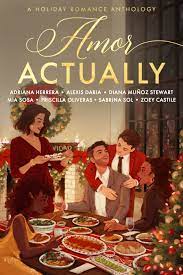
Just like the movie title it is inspired by this anthology is all about love-Between significant others, families and friends during the joyful season that is Nochebuena. In fact you can see elements of the movie in each of the nine stories from kids proclaiming love songs to their crushes to the famous notecard scene.
There’s something for everyone as the authors put their own updates on the classics with couples of different orientations and life-styles. I particularly enjoyed Olivieras’ Meet Me Under the Mistletoe which is a second-chance romance between a widower and his son’s music teacher. Same with Muñoz-Stewart’s The Nochebuena Dating Dare which tackles datinng after divorce, family dynamics and a very steamy scene.
But there’s not only mature ex-married people. There’s Herrera’s sweet Make the Yuletide Gay and Sosa’s best friend to sexy santa helper in Santa’s Eager Helper and a delightful nochebuena get-together of all the characters coming together to celebrate the season, If you’re a holiday lover, this is the book for you, it’s just so full of cheer.
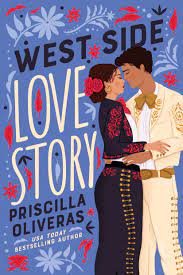
West Side Love Story by Priscilla Olivieras
“In the heart of San Antonio, a city lush and culturally rich,/ A long simmering rivalry heatens, rising to a featured pitch./ Competition grow fierce; lines once boldly drawn, now foolishly crossed./ As lives become entangled relationships once strong/may ultimately be lost.
Two young lovers unwillingly swept up in the brewing storm. . . ”
Oh yeah it’s a Latin Romeo and Juliet story guys, buckle up. Featuring the feuding Casa Capuleta and the prize-winning Montero Maraichi Band in San Antonio’s latest Battle of the Mariachi Bands for charity. As one can imagine, the families are less than charitiable to each other thanks to the feud started long ago when Capuleta stole away the Montero patriarch’s fiance. The man hasn’t forgotten and will do anything to keep the Capuletas from winning.
However, Marina Capuleta and Angelo Montero are caught in the cross-fire. Briefly hooking up with heartmelting kisses during a New Year’s party, the two are shocked to find the stranger was a family enemy. But they can’t bring themselves to get into the competition for the same reason. Rather they try their best to cool the fires of their families so the focus can be on the music and on charity lest they get booted out of the competition.
Marina has a bit more at stake here as her family’s center helps disadvantaged families and foster several girls whom Marina used to be. She now has seven sisters and is trying her best to bond with the surly new girl Nina whose tough walls remind her of when she was trying to get used to being accepted and trusting the unconditional love she has. Additionally, her family is dealing with the sexism inherant as one of the only all-female mariachi bands. Plus she is struggling with her own high-pressure job in nursing.
Luckily, Angelo is an understanding young man who provides a safe space for her to relax the responsibility once in awhile. A need he deeply understands since his parent’s car crash left him to quit school to take care of his little sister. He mainly has his uncle to thank for providing for his sister and he but he also feels indebted and finds it hard to stand up to the man who has done so much for him. But he can no longer turn a blind eye to the gentrification efforts his uncle is spearheading nor the brutal underhandedness which he wields against the Capuletas just because of a bitter old grudge.
It’s a perfect blend of the contemporary with Shakespeare’s famous premise to deliver new growth to the star-crossed lover while highlighting themes of family, loss, trust, culture and the art of mariachi
Don’t Ask Me Where I’m From by Jennifer De Leon
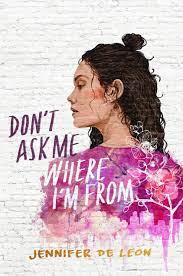
This is a moving, relatable piece about growing out of your comfort zone and keeping family together.
Liliana is a regular girl attending classes and dealing with annoying brothers when she’s called into the principle’s office. She has won the lottery to go to a better funded/white majority skill in Boston as part of the METCO desegregation program. While she’s intially against the idea of being a new girl and having to assimiliate with a bunch of bougie trust fund kids, but after hearing more about the opportunities it presents like better chances of college acceptance and writing programs, she accepts. Especially since her mother insists and she knows it’s what her father would want for her.
Which brings to the bigger concern in Lili’s life, her dad has been missing for months which has happened for a week or two but months? That’s when Lili finds out her parents are undocumented and her father has been deported. Suddenly the heritage that she has been disconnected from for much of her life is at the forefront of her life. Compounded by the microaggressions, and overt displays of racism she experiences at her new school as she feels iced out by the fellow METCO kids and the white ones who either treat her as an exotic or are completely out of touch with the real life people they call “illegal aliens.” It’s a wary feeling of being invisible yet way too singled out.
It has more than a few themes and topics that will remind readers of Thomas’ The Hate U Give tackling microaggresions, interracial relationships and code switching but it separates itself enough that it will stand out with its discussion on immigration, storytelling and heritage. Lili is engaging protagonist whose confusion and coming of age tale will be moving and relatable to many I believe.
What Would Frida Do?: A Guide to Living Boldly by Arianna Davis
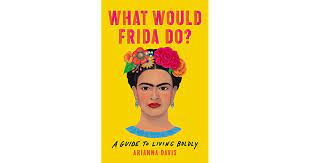
This book combines a sensible living advice like working through creative drought and such. As one can imagine it is themed by following Frida’s biography from her traumatic bus accident, tumultuous marriage, political leanings and her artistic career.
However, if you’re looking for in-depth look in Frida’s life you’ll be disappointed. It’s actually a bit repetitive and won’t offer new information you wouldn’t already know if you’re interested in Khalo’s work. It focuses more on hypotheticals of what would Frida do? (Title drop!), and the author’ admiration of the Mexican painter and her life. Also she does an admirable job describing Khalo’s famous works but it would have been enjoyable if the book provided pictures instead of me having to look it up.
Dominicana by Angie Cruz
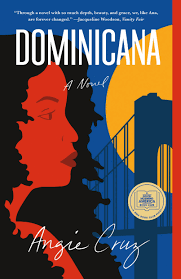
I just breezed through Angie Cruz’ novel of a young woman in a whole new country after she marries the hero of the town and moves to the U.S. in order to start the process of bringing the rest of the family over. She’s only 15 and her husband is twice her age but she shoulders this huge burden and settles for a life of loneliness. So she thinks.
The prose is an almost lyrical stream-of-consciousness as it follows Ana muses of her new neighbors, this new city, learning more English as well as the various civil rights revolutions happening in 1965. At the same time, the island is experiencing its own political turmoil that her husband, Juan returns to deal with. Alone and pregnant, she plans to escape New York but Juan’s irresistable and actually caring brother stops her. Just the two of them, Ana is able to experience some independence for the first time and forging her own life in America.
Cruz tackles the difficulties of Ana finding her own way and the guilt and rift that forms between her and her mother over a series of phone calls as Ana’s new desires goes against the family’s conservative traditional beliefs. It really is a story about what it means to become American while keeping it close with your heritage. It is especially poignant as Cruz was inspired by her mother’s story of coming to America as well as that of others in her Dominican community.
Mexican Gothic by Silvia Moreno-Garcia
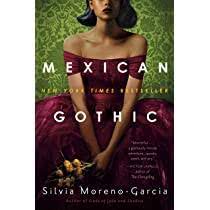
It’s just as the title says and it does not disappoint. Naomi is your typical debutante into dresses and cocktail hours, but while Naomi may not be considered reliable in business matters, she is a family woman at heart. When her cousin, Catalina sends an uncharacteristic letter, pleading for help and that dangerous forces are draining her, Naomi is off to the rescue.
Once she reaches the gloomy villa. . . . well not really gloomy. Yes, it has the requesite dark halls and several banned wings of the mansion. It’s quite opulent. However, it has an unnerving quality to it. Like someone is watching, like it is haunted which the feeling is only increased as she meets Catalina’s forboding in-laws whose strict and secretive nature adds to the eerie feeling that something just isn’t right. All her attempts to help her cousin are blocked at every turn and she’s gaslit to believing it’s just the hysterics of a feminine constitution.
I once read that gothics are women’s horror stories because it focuses on themes of domestic violence, abuse, and family secrets which this holds aplenty. I really can’t go more into that because I don’t want to spoil the book for those who want to get into the mystery themselves but it does an excellent job of not only building up the suspense but also making the shadows and ghosts twist in ways that make you feel just as Catalina and Naomi do, that their sanity is slipping. You can’t quite be sure what’s real, and worse, you feel helpless to stop things from happening even while every part of you tries fruitlessly to do just that.
But it also subverts some tropes by addressing real-life issues that other gothics would just ignore or just hint at themes that would have been relevant at the time. Themes like colonialism and racism which go hand in hand with class disparity narratives that are often part of the gothic trope. It’s the blending of past and present that makes this more exciting as the wounds of history often dip into families’ secrets and just makes it all more impactful.
Olga Dies Dreaming by Xochitl Gonzalez
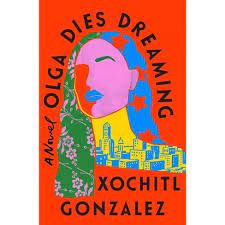
Now you might be thinking of the American Dream but it’s not that kind of easy American rhetoric. Well not for the Blanca. Blanca, the mother of the titular Olga and her brother, Pedro Acevedo. She who immigrated from Puerto Rico to New York but then abandoned them to return home and join the Young Lords for the island’s independence. As such the children have an estranged relationship with her and her increasingly radicalized ideals.
Olga and Pedro are trying to achieve the more typical “American Dream” getting into elite spaces, working for top clients and foraying into politics. But it’s not that easy when you’re part of a minority. Fused with a deep connection to the progress that has been done over time, it still points the long way there is to go. Going back and forth between past and present is the best demonstration of that but the real heart of the story is the two protagonists.
Though you’d think Olga would have more of the page time, Pedro is given equal time as he struugles with his political career and his own fears regarding coming out as a queer Latinx man during election season especially after his rather painful experiences witnessing the treatment of the queer community during the AIDs crisis. That tangled with his feelings of his mother and how they’re both fighting in the political arena in vastly different ways creates a compelling narrative of how the personal is always political and the strength of establishment politics and grassroots activism.
Olga is a more confident and direct voice, but that confidence belies her experiences with microaggressions, actual aggression, and her own flawed actions that lead to some big mistakes in her personal and professional life on her ever-moving goalposts to success. She is not always likable, sometimes she doesn’t even like herself but she does try. Her anger can be her weapon and her downfall but it all feels so raw that you just have to read more.
Gonzalez’ writing if I have to put it in words, it’s genuine. She uses down to earth language that you would expect to hear in Brooklyn and in Puerto Rico, mixing dialects and slang yet it is also done in a way that feels like a familiar drone even if you never been there.
A great modern story tackling timely topics.
Love in the Time of Cholera by Gabriel García Márquez
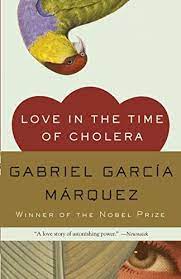
I had to try this classic though I’ll admit it was a bit hampered by my confusion. Márquez’ writing is beautiful but as he sometimes gets so into desccribing the minutia of the place, and the lushness of Columbia and just his words are very beautiful, I got lost on what the point was. Youknow, like admiring a painting till you get lost in the swirls and forget the bigger picture.
Anyway, since this is one of Márquez’s greatest works I won’t rehash the plot but I will say I did enjoy the classic unrequited tension and longing of the love story between Fermina and Florentino and how the break-up was a realization of one of love’s biggest tricks. Sometimes you idolize and built up the person so much that the person you really love is all in your head. Even so, Florentino stays devoted despite Fermina moving onto one Dr. Juvenal Urbino who I didn’t really like as he personifies all those rational medical people who care so much about their work and progress and reputation that they mess up their personal relationships.
But really love is complicated as Márquez shows through the years of the Urbino marriage and Florentino’s unrequited devotion and asks what is true devotion, what is true love? Lust vs love and of coursse, how death is involved in all this as love can represent the highest of highs in life but death is always there to balance it out.
I read these yesterday as they only arrived after Hispanic Heritage Month but they’re still worthwhile reading for the month.
Martita, I Remember You by Sandra Cisneros
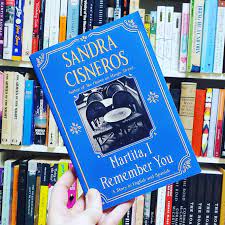
This short story illustrates the importance of friendship however fleeting as Corina, nicknamed Puffina finds old letters from her friend, Marta and remembers her time in Europe, desperately hoping for a writing grant from Cote De Azur and the two expats, Italian Paola and Argetine, Marta also finding joy and meaning in Europe.
Cisneros’ writing is sparse but evokes the sentimentality and nostalgia that comes with looking to the past, wondering about old friends and their brief but lasting importance on your life as you grow.
After Hours on Milagro Street by Angelina M. Lopez
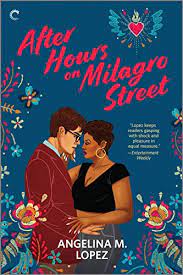
Lopez sure knows how to start off her story with a bang as the oppositional protagonist fuck in the first chapter within five minutes of seeing each other. Yes, fucked, “having intercourse” is too tame to describe the intensity and the heat. Of which the main character, Alex has plenty. The baddest bitch in bartending embraces her reputation when she return to her small hometown of Freedom, Kansas for the first time in years. She plans to renovate her abuela’s old family bar, Loretta’s to bring back more money and stop the town’s racists gentrifying efforts.
However, Professor Jeremiah Post seems to be an obstacle to that plan as his offer to make Loretta’s into a museum highlighting the Mexican-American immigrant history of the town is much more appealing to her family. So, of course, they move into the same tenent and the forced proximity does not help dile down the spark they have.
Intially, the hate sex didn’t appeal to me as Alex is incredibly abrasive and almost physical to Jeremiah but Lopez does a good job in organically having the characters actually start communicating with each other before blowing up into fights. They start learning more about their pasts and why Loretta’s means so much to both. Additionally, Lopez uses the history professor occupation of Jeremiah and Alex’s family history to detail the real history of traqueros working on the railroad after the Chinese Exclusion Act. As they point out, American history likes to pretend that the Midwest was always 100% white when there is a bountiful history of people of color.
Not only is their romantic drama, but there’s also the well-done character development undergone by Alex as she also tangles with her family especially her estranged father as well as her strong-willed grandmother as she realizes some of her well-intentioned actions do not across that way to the latter.
Plus, it isn’t just a realistic story filled with family and heart of two people realizing that they’re not alone as they feel but a haunting of racist ghost and buried treasure adds to the excitement as to whether the heroes will succeed.
 Rachel Reads & Reviews
Leave a comment