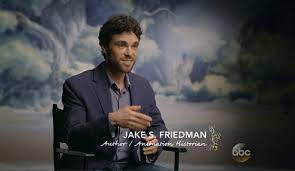
Jake S. Friedman is animation historian who has written many articles and novels on the field from publications such as The Huffington Post, Animation Magazine, The Philadelphia Daily News etc. He has also worked in various occupations on several popular shows (Little Einsteins, Wonderpets to name a few) and is the official biographer of animation legend, Art Babbit which you learn more on his blogs:https://www.jakesfriedman.com/home and https://babbittblog.com/. He kindly answered my questions on his research and his upcoming, delving into the remarkable history of one of the largest companies in the world. Please read on and enjoy.
1. Let’s start from the beginning, when did you first begin appreciating animation?
When does “loving” becomes “appreciating?” I always loved drawing and watching cartoons. I think I was probably 8 when I learned that actual artists made them. On a family trip to Walt Disney World we saw dozens of artists through the window working on “Rollercoaster Rabbit,” and I had stars in my eyes.
2. And then you began working in animation, how did you get into the business?
I graduated from NYU film school’s animation program with a student film which ran in some festivals. That, plus talking to school staff and making connections led me to a Production Manager who was recruiting.
3. I see on IMDB, you have also done work on shows and movies such as Wonder pets, Little Einsteins, Sita Sings the Blues, Epic: Did you have a favorite series or episode that you worked on?
Each project was unique. On “Little Einsteins” I was brought in do to pre-production research art early on, so I got to see how a cartoon show is developed. For “Wonder Pets” we animated in units and had our work sweatboxed, just like the golden age of Disney cartoons. But my favorite assignment was at the J.J. Sedelmaier studio animating for “Saturday Night Live,” because that was the only time we animated on paper with pencils. Plus, J.J. and his crew were great.
4. How did you first discover the work of Art Babbitt?
I was aware of Art Babbitt at age 15 through Shamus Culhane’s books. I didn’t quite grasp the scope of Babbitt’s impact until I started working with his widow on a book about him and went through his personal records.
5. How did you get the honor of becoming his official biographer?
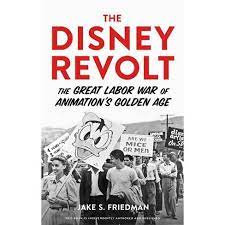
John Culhane handed me the project. John was my History of Animation professor at NYU, and he became a mentor. Art Babbitt’s widow wanted to preserve her husband’s legacy. She pitched around the idea of a Babbitt biography, and John recommended me. I was 26 at the time. Now it’s been 15 years, and book, called “The Disney Revolt,” is finally out on July 5!
6. What makes Art so monumental in the animation world and why do you want people to know about him?
Babbitt was Walt Disney’s most valuable asset during Disney’s golden age. Babbitt came up with all these techniques still used today – live-action reference, character analysis, the in-studio art program – all this led to Disney skyrocketing throughout the 1930s. Not to mention being a lead character animator, and also developing Goofy! Then Babbitt led the famous 1941 strike which finally brought a permanent union to the Disney animation studio. Later he taught the animators who made “Who Framed Roger Rabbit,” so he’s part of the Animation Renaissance too.
7. One of your first books was about the Labor Strikes at Disney in the 1950s, for the less in-the-know Disney aficionados, can you say what that was about?
“The Disney Revolt” is about the 1941 Disney strike. The first half walks through how Walt Disney and Art Babbitt became who they were. Then we live an animator’s POV of the Disney studio from 1932 through the premiere of “Snow White,” a halcyon time. The second half is from 1938 through 1941, and we witness everything that tore the studio apart. There are a lot of knots I untangled about the strike, thanks to tons of research, records, and cool images I found. I share a lot of the records freely on the book’s website, TheDisneyRevolt.com
8. What are some interesting bits about the strike that you found in your research?
Well, some may know, but the Disney company hired the Mafia to block the strikers. The main Mafia boss, Willie Bioff, is so fun to hate, and plays a major role in the story. Also: some non-striking Disney employees started a secret society called “The Committee of 21” and wrote some pretty crazy letters to discredit the union.
9. You also wrote a book about the Art of Blue Sky Studios, how do you feel about it’s shutting down?
Super bummed. It reminds me of how the 1941 Disney strikers were fighting for job security.
10. As a reporter with over a thousand articles on art, animation and the industry, who was one of your favorite interviewees? Or your favorite subject that you have done?
Not quite a thousand, but thanks. I have had so many terrific interviewees. I’m a huge fanboy. One of my favorites has been animator Gary Conrad, who I interviewed for a CalArts retrospective early on and we became good friends, and he has been helpful and supportive ever since. I became friends with June Foray, and Marge Champion, and talking with Don Lusk was a trip. I loved going to Peter deSeve’s home. Andreas Deja and Eric Goldberg have become friends. But there was something special about interviewing Alan Young, the 1980s voice of Scrooge McDuck. He was a superstar to me, and he let me interview him in character. So I got to ask Scrooge McDuck the “Inside the Actor’s Studio” questions, and now I can die happy.
11. Your upcoming book, Disney Afternoon, focuses on favorite tv shows from the 80s-90s, what can you tell readers about the book?
The Disney Afternoon book is an art-of book and a behind-the-scenes. It’s the story of Disney’s TV animation department, which sprouted in 1985 like a fully-grown oak tree overnight. It was just a tremendous feat, and I spoke to all surviving showrunners, including department-head Gary Kreisel, who sets a lot of things straight. I try to make it as much about the people as the shows they created. The book has been on hold since 2020, and it won’t be out this October as planned, but I was told it is definitely “forthcoming.”
12. Any other upcoming projects that you want people to know about?
Keep your eyes peeled for The Disney Revolt on July 5. It’s non-fiction, but I really tried to make it a good story with characters that come alive.
13. What are your blogs/websites/social media people can read your work or contact you?
You can visit me on JakeSFriedman.com, and on T/IG at @JakeSFriedman. I’m not the best poster… yet… but I could always use encouragement!
13. The Amazon summary for Disney Afternoon says you’re covering shows like Gargoyles, Ducktales, Talespin etc. Do you also cover the ones that spin offed from movies like Legend of Tarzan, Buzz Lightyear of Star Command, Aladdin:AS etc.? Because sometimes it feels like I’m the only one who watched those shows and I desperately want to know behind the scenes. And if the writers really did want Aladdin and Mozonroth to be half brothers or if that’s a wild internet rumor.
If it aired on (or before) The Disney Afternoon, I cover it. This includes the Aladdin series. Though I tried to mention all the Disney TV Animation shows, so each gets some love. As for that fan-theory? Not true. Bob Schooley and Mark McCorkle wanted to give Aladdin a foe his own age to contend with, that’s all. But hey, other fan theories have become canon, like the Beast’s name being Prince Adam. So who knows what the future holds for Mozenrath?
You can buy The Disney Revolt on its online bookstore: https://www.thedisneyrevolt.com/
 Rachel Reads & Reviews
Leave a comment