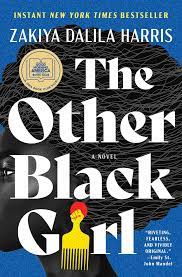
Just as everyone was raving about Harris’ new book in the NYT last year, I had to jump on the wagon and see what the fuss was about, and I agree, it is for the most part a really good book.
There’s a common consensus that it’s hard to be a minority in the work force. You’re often alone in a room full of men, usually white. It is especially hard when you’re a double minority, supposed to represent your race and prove women can get keep up with the men. You would think that would foster friendship when another climbs to the top with you, but the competitive stakes unofficially stating that only one can make the quota, you tend to try to push the other out.
Not so for Nella. Her job as a book editor and sensitive reader is harrowing with microaggressions and authors whose white fragility often puts Nella on edge with her critiques because she doesn’t want to be seen as too difficult. So she’s thrilled when Hazel comes onto the scene, as someone she can confide and commiserate with.
But it seems Hazel may be one of the above types, vying to be the sole black girl at work. At least that’s what Nella suspects. But she also doesn’t want to believe that of Hazel. Yet Hazel’s actions and seeming friendship also point to her suspicions. As Hazel encourages Nella to embrace her black feminity and power, it ends up making Nella unpalatble to her collegues while Hazel fits right in.
That combined with what seems to be a growing conspiracy of why Nella’s role model left Wagner Books year adds to Nella’s worries and growing paranoia as she resolves to find out what Hazel is up to. It’s a great social commentary about the internal divisions in the workplace and personal struggles of being too blac, not black enough and code switching.
But the ending keeps it from being a standout.
However, it veers from realism to a somewhat sci-fi mind control twist that disappointed me. Now I understand that it’s a metaphor used to illustrate the struggle, defeat and assimilation because the systematic racism and microaggression wear black women down to the point they just let go and accept it and they don’t have to be strong and to fight all the time. But in a novel that had been realistic up till now, highlighting and exploring the real life struggles of black women being tokenized and pitted against each other in the majority white workforce, it felt like a cop out to shift in a whole different direction. It was just unsatisfying.
So good book with a timely social commentary but it held out in the ending from making it great.
 Rachel Reads & Reviews
Leave a comment