Now for my final post for Women’s History Month. Woo woo, I can’t believe I got to 8!
#NotYourPrincess by Lisa Charleyboy and Mary Beth Leatherdale
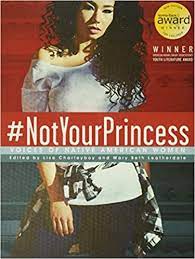
This book is chock-full of essays, paintings, essays, inteviews stories and other mediums from Native American and First Nation women all over North America. It seeks to repair some of the damage left by colonial forces that sought to erase and oppress their voices. But they have risen and they have survived and are here to tell about the abuse, atrocities and stereotyping from the past to the present that people wish to ignore. They are sharing their stories and demanding change. It’s a raw book, and they do not sanitize the pain they’ve been through, but also has moments of cathartic reflection and hope for a better future.
Imagining Ourselves, edited by Paula Goldman
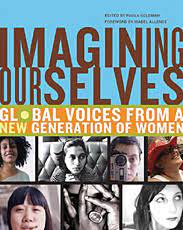
Another anathology that takes stories/essays/drawings/photos/other mediums from women around the world (literally there is an index separating the contributers from Asia, Eastern Europe, Western Europe Latin America, Middle East & North Africa, Sub Sahara Africa, North America, and Oceania). THis was part of the 2006 International Museum of Women Online Exhibit and Global Gathering which has now become a permenant museum. Created to highlight the achievements and changes brought on by this generation of women who were becoming educated, traveling, working, breaking boundaries in higher numbers than ever before. It started with the question of What defines your generation of women? The answers are as diverse and unique as the experiences of each woman herself. Some are famous like Isabelle Allende and Oksana Baiul, others may be well known in their respective fields like Hafsat Abiola while most are regular women who had a story to tell or only famous to their local communities. It highlights the changes in tradition and perspective, the challenges ahead, and the positive contribution of these women using their culture/strength/knowledge/convictions to bring about positive impact for future generations, and comprehensive in covering the many aspects of being a female or being a human in general as it is split into four sections: Inside (spirit, body, family/relaationships, self development), Outside (community, work, power), Between (generations, borders/identity) and Towards. Also includes articles and resources to fight against sex trafficking, HIV/AID, domestic violence and support reproductive health education, women in politics and the pay gap.
Lawbreaking Ladies: 50 Tales of Daring, Defiant and Dangerous Women from History by Erika Own
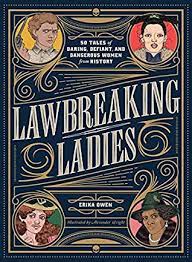
Owens’ Lawbreaking Ladies was a good book providing stories of the derelict and bad ladies that history sometimes glosses over because a “woman isn’t capable of such cruelty” which she notes they sometimes used to their advantage in courts. Split into 7 sections, Pirates, Prostitutes, Gamblers, Bootleggers, Serial Killers, Fraudsters and Outlaws, she tells some famous stories like Bonnie Parker and Ching Shih with some new ones like “Jolly Jane” Toppan, a nurse who enjoyed killing thirty of her patients. She also makes a point to mention that some of these lawbreaking ladies were breaking the law not for the sake of greed or malice but because they couldn’t fit into the strict conventions of the time. In fact she is quite sympathetic to most of them, presenting it as almost empowering. Except for the Serial Killer section because that’s just wrong and you can’t gloss over murder with girl power. However, I think Owen was too ambitious in this book trying to fit 50 women in. Some women only had a paragraph, and while I understand she probably couldn’t find many resources since women exploits were not as recorded as men’s were, I think it would have been better if she just stuck with a small number that she could have gone in depth with than cram 50 into 200 pages.
In the Line of Fire: Eight Women War Spies by George Sullivan
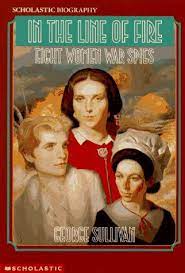
I think this is one of the first women’s history books I ever gotten. For in this slim volume, Sullivan covers 8 female spies who did everything for their country from Revolutionary Patriot, Lydia Darragh to Confederate spy, Rebel Rose. Straightforward with some nice photos of each, Sullivan details their life story, some of their daring work as well as their ultimate fate. While it is a good primer, I believe some of the facts may be outdated as he presents Mata Hari as the duplicituous femme fatale we imagine her to be, when new information reveals that she may have been winging it as she went along, trusting the wrong people to getting double-crossed herself. Not so much of manipulative genius.
Girlhood: Teens Around the World in Their Own Voices by Masuma Ahuja
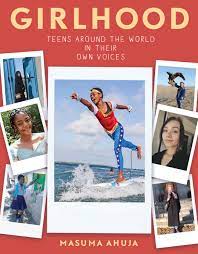
This anathology was based on a series from The Lily magazine, asking for diary entries from girls around the world from Cambodia to Vanuatu to New Jersey to Guatamala. It shares some universial ties girls share like insecurity, friendship problems and stress studying. But also gives voice to some important issues like teen pregnancy, child brides, eating disorders and others. The point of it is to give space for female voices, especially adolescent ones who often are ignored or dismissed. It is for kids, and can be very repetetive as pieces from their interviews are repeated from their diary entries and their bios.
Thrill Seekers: 15 Remarkable Women in Extreme Sports by Ann McCallum Staats
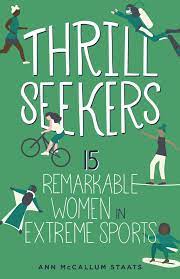
This book is just as the title says, Staats takes readers through the discipline, work and courage it takes for these women to do such sports like slacklining, skydiving, and formula one racing. It heartily reminds people of the dangers (and the coolness) inherent to undertaking these sports but also thoroughly explains the safety procedures, sports terms and equiment used to make sure they don’t die. It also has interviews from each women as they detail why they love the sport and the adreneline rush that comes from it. Perfect for ant sports fan. Staats also released 8 other books in this series of women changing the food industry, music industry, film, STEM< earthquake science, entrepeneurs, wildlife research and aviators/astronauts.
She Changed Comics: The Untold Story of Women Who Changed Free Expression in Comics by Betsy Gomez, presented by The Comic Book Legal Defense Fund
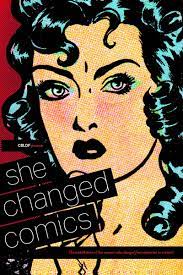
This comprehensive book started by the Comic Book Legal Defense Fund shares a list of famous and forgotten comic creators that have shaped the industry today. Not only as superhero artists and writers, but as editors of newspapers and political pamphlets. Free expression is the main point here, presenting the importance of it in various genres of Comix underground, erotica, self-published etc. It also includes interviews with women making strides toward like Noelle Stevenson and G. Willow Wilson as well as a whole spread on important manga artists/writers. The only downside to this that there is only 2-4 pages per women and not much of their artistic work, ironic since it’s about comics. But it provides lots of citations and articles for readers to find out more themselves.
Frontier Grit: The Unlikely True Stories of Daring Pioneer Women by Marianne Monson
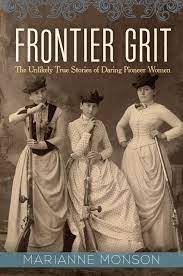
This book provides a narratovely exciting, well-researched glimpse into the women who helped found the new frontier from Native American leader, Zitkala-Sa who fought to protect her culture, root out corruption, and educate the outsiders inside and outside the governmental system. Clara Brown who bought her freedom after her master died and went out west to become one of the wealthiest women that shipped out southern slaves to freedom. Two of my favorites include Donaldina Cameron who saved Chinese sex-slaves (of which it is a bit Christian white savior complex but she was still badass. She stood up the president!) and Martha Hughes Cannon who not only became a doctor, but was a polygamist who beat out her husband to become Utah’s first female senator. If one thing is for certain, these women had grit and I enjoyed how Monson put an effort to show diverse collection of not only white women but also how Mexican-American, Maria Ampara Ruiz de Burton was affected from the change of Mexican land to U.S. territory, Native American/African American as stated above as well as Hawaii, Makaopiopio.
Native Women Changing Their Worlds by Patricia Cutright
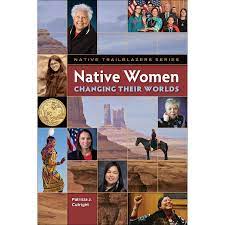
Another well-researched book featuring 12 Native American and First Nations women who have contributed to history past and present by overcoming odds, abuse, poverty and more to embrace their communities and make a change. These were particularly stirring as the growing message from this was education is key, family and heritage are the things that will fuel you and help you reach your goals and belief that you can give back to your community whether it be as first female chief (Elsie Marie Knott), Miss Universe (Ashley Callingbull Burnham) or winning a landmark court case (Elouise P. Cobell in Cobell v. Salazar). My one gripe with the book is that some of the writing felt like it was for kids with short sentences and repetitiveness even though the content was not for kids.
We are Displaced by Malala Yousafzai
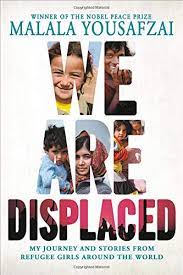
While Malala briefly goes over a bit of her childhood and internal displacement from the Swat Valley during the government pushback against the Taliban, she states that this is only to get your attention. She knows you’ll pick up this book because she is the Nobel Peace Prize winning inspiration, so she’ll share her story again. But she wants you to read on to listen to the other stories here. Stories she heard from other girls going through the same displacement as she was. Girls who are forgotten and ignored, but who have strength and intelligence and the resilience to keep going despite the horrors they left, the heartbreak they hold and the hardship of the present. She brings the raw, first person view of the refugee crisis with these personal sories but it is not tragedy porn. Like I said, they are resilient girls, just torn from their homes with a wish to make things better. They are just like anyone else which is important to remember during these hostile times.
Dangerous Books for Girls: The Bad Reputation of Romance Novels Explained by Maya Rodale
Good Girls and Wicked Witches: Women in Disney’s Feature Animation by Amy Davis
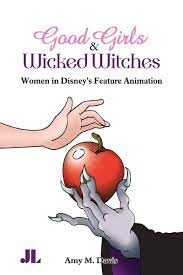
These academic thesis books tackle two controversial mediums that some fear are unrealistic and unfeminist influences on female image of romance and beauty, yet still are products that females heartily consume.
Rodale’s book traces the beginning of the romance industry, the rise of female authorship and where the disparging reputation toward the romance novel comes from. Featuring readership surveys, other relevent texts and talks with romance industry insiders, Rodale comcludes that the bad reputation of romance novels comes from the idea that romance writers are lowbrow, and uneducated writing trashy books which stems from the the eighteenth century fears that female readers weren’t capable of understanding the difference between fact and fiction, thus shaming and dissuading females from reading them. This continues on today with cries that romance novels are unrealistic, as if sci-fi and superhero are the epitome of realistic. It’s idealized entertainment, in an industry that is run by women, that put the woman in the central role of the story, focusing on female desire and pleasure which are still such controversial topics today.
Davis tackles the hot-button issue that Disney is brainwashing girls to become submissive dependents on princes. Untrue, Davis finds. While some of the messaging Disney perpetuates, especially in its early years, that the female stories always revolve around/pushed aside for a man are true. There are bright sides as well. All the women have some ascertainable personality (except Aurora), they are shown to take action that move their stories forward and it is ultimately they’re choice to take the man to achieve happily ever after. She emphasizes how some of this is a product of their time (Cinderella, Snow White) but as the time goes on, Disney princesses are steadily getting more progressive, incorporating messages that speak to the time period (ie. Pocahontas’ pro enviromentalism message). She also analyzes the Disney villainesses and how they speak to the fears of female sexuality, ambition and independence in contrast to the inherent goodness of Disney princesses. It concludes that Disney sends good and harmful messages like most anything on television and media but it is up to us to have conversations about it.
Extra reading
I haven’t included these have not been released yet into libraries.
Ann Shen’s Revolutionary Women: 50 Women of Color who Reinvented the Rules (Oct 18 2022)
Emily Friedenrich’s Extraordinary Mothers and Daughters: Stories of Ambition, Resilience and Unstoppable Love (March 31 2022)
Diane Knapp’s Girls Who Green the World: Thirty Four Rebel Women Out To Save Our Planet (April 5 2022)
 Rachel Reads & Reviews
Leave a comment