Nonfiction
Radium Girls: The Dark Story of America’s Shining Women by Kate Moore
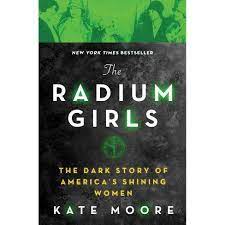
This book takes on what should be a more well-known historical case in the history of women’s rights and workers rights. The case of the Dial Girls who slowly poisoned themselves and the managers who tried to willingly ignore their complaints and ailments that signaled radium posoining. why? They were just poor, working women, they could get more of them. Besides the important thing was making a profit, not safe working conditions with non-hazerdous materials. However, several women would not take this lying down. They went to court, they sued and they won. It’s a well-researched story that weaves in the tragic narratives of these girls who didn’t have much time left but wanted to save those who came after them.
Also warning that there are pictures. Very intense pictures of the swelling and crumbled bodies.
Yes She Can: 10 stories of Hope and Change from Young Female Staffers of the Obama Adminstration
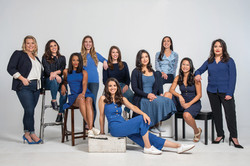
We all hear how people can get into politics while they’re young and how they can help implement change, but I guess I never really believed it for some reason. Until I read this. Just graduated or seeking internships, these girls got a front view seat to the White House, working on committees ranging from cancer research with the VP’s team to helping implement a better healthcare communications for Jewish elders. It was lovely to hear a bit of their work and the personal stories that led to their decisions to dive into this fast-paced world.
Diary of Anne Frank
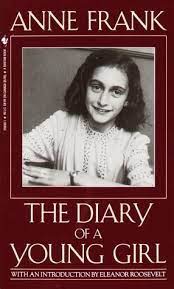
I don’t think I can add anything else to this. It’s moving, it’s full of hope and humanity in the darkest times. Roosevelt said it best, everyone should read this book so that we shall never forget.
Groundbreaking Guys by Stephanie Peters
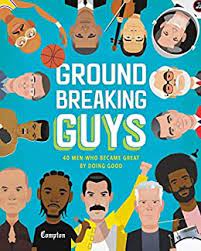
This book chooses to highlight 40 historic men, living and dead, not for historic deeds as winning battles or presidential valor, but for the good they have given. Peters chooses such greats like Mohamad Ali for his anti war stance, an act that the boxing federation stripped him of his titles for. Louis Pasteur for his lifesaving smallpox vaccine which he chose not patent his vaccine because science and medicine should be for all. She emphasizes how these men cared and went above and beyond for causes that benefit humanity.
It’s a bit brief but it’s a good starting point for those looking for positive male role models from around the world.
We Are Power: How Nonviolent Activism Changes the World by Todd Hasak-Lowy
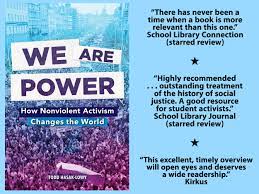
Going into several historical non-violent protests that changed the world (Czeck’s independence, Ghandi’s Indian Independence, MLK’s marches, Cesar Chavez and the Farmworkers of America). It emphasizes the strength and dedication that is needed to make these movements happen, as well as that it takes a long time, but that it is worth it. Even as it reminds readers that there is still work to be done and to continue the fight. It really empowers readers with the idea that people can make a difference in the face of injustice and win. Great for classrooms.
Charles and Emma: The Darwin’s Leap of Faith by Deborah Heiligman
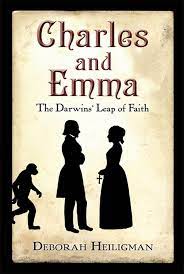
Before there was Hamilton and Eliza, I thought Charles and Emma’s love story was incredibly heartwarming even as they differed spiritually. In fact that is the main conflict Heiligman explores. Emma fears for Darwin’s immortal soul as he dives deep into his theories and explanations to proving his theory of evolution yet she still stands by him. Just as Emma tries to support Darwin, he struggles with his own beliefs as he genuinely wants to comfort Emma by believing in God but can’t bring himself to accept it after his discovery of evolution. This is a great timeline of Charles’ achievements and his personal life for anyone who wants an in depth look into one of the greatest minds of science.
Fiction
Queen of Water by Laura Resau and Maria Virginia Farinango
This fictional novel is based on the real life story of Maria Virginia Farinango, an indigenous girl who leaves her family village in the Andean mountains to work for a rich mestizo couple. As one can imagine, it is not an easy transition and she is often derided for her indigenous roots and poor station in life. But she takes the opportunity to educate herself and maybe hope for more. Even as she taught to be ashamed of her heritage by her employers. This is a story of Farinango finding her place in the world and coming to terms with who she is. It’s is moving and engaging. A good read for book clubs I think.
Doll Baby by Laura Lane McNeal
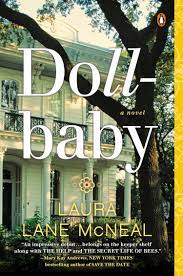
This hsitorical novel takes place in the 60s after Ibby Bell’s mother leaves her with her eccentric grandmother in New Orleans to wander the world by herself. ibby’s grandmother is a classic southern lady full of secrets that she keeps close to her chest, quick with admonishments, and a perchent for her dolls. Luckily, her servants Dollbaby and Queenie help Ibby feel more at home and help her deal with their mistress’ wild moods. This is set right after the Civil Rights Act of 1964 so tere are intense scenes of prejudice, racism and lynching. Not by the protagonists but from the awful mean girl targeting Ibby’s friends. Also Queen comes to believe and hope that Dollbaby can reach for a better life. It’s about generational trauma, mysteries and secrets with bits of humor sprinkled in that keeps you to the edge of your seat.
Madame Tussaud by Michelle Moran
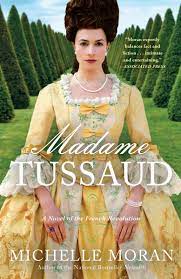
Moran’s well-researched novel takes readers through a fictionalized account of Tussaud’s life and how she began her famous wax collection. It began in Versailles admist the grumblings of the French Revolution. While Tussaud can understand the disocontent of the working class, she is still very much an elite and is much more worried about the fate of her friends and clients and loves. In fact, everyone in this novel show duplicituous sides as the Reign of Terror comes roaring in. No one knows who to trust. But Madam makes history by preserving it in her wax figures (some taken from corpses), demonstrating the long held appeal and fascination it still holds today.
In Mozart’s Shadow by Carolyn Meyer
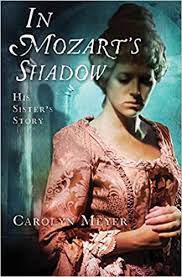
Did you know Mozert had a sister? Probably if you’re a big fan of him, you know every family member. But did you also know she used to be as big of wunderkind as him. . until puberty hit. Not that puberty erased her talent, history did that as young women weren’t supposed to do things like making a name of themselves, create works or travel. In fact, it is now believed that Mozart was aided in some of his great compositions by Nannerl. Meyer seeks to put her back in the spotlight, imagining what it must have been like for a talented young women to be pushed aside from persuing her passion in order to do what it is expected while her beloved brother gets the glory.
Mary, Bloody Mary by Carolyn Meyer
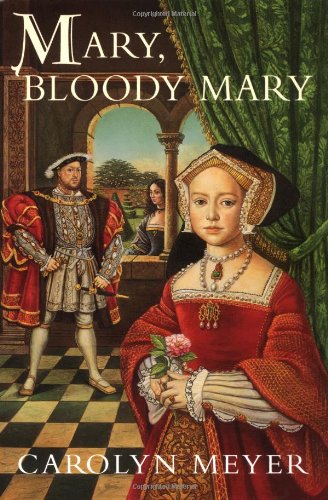
Meyer strikes again putting overshadowed women in the spotlight. This series follows the Tudor women, Catherine of Aragon, Anne Boleyn, and their daughters Mary and Elizabeth. Mary was my favorite. Though history has cast her as the evil stepsister, that was not always true. As Meyer researched and depicts, Mary had cared for Elizabeth even though she despised Anne for abusing her and treating her as a nursemaid. At times it lacks emotion, feeling more like a report than feeling Mary experiencing these events, but it is a good primer to who she was.
Hattie Duology by Kirby Lawson
Inspired by letters written by her grandmother that she found in the attic, Larson embarks on her first historical novel, Hattie Big Sky, envisioning the titular Hattie as she heads to Montana to stake her dead uncle’s claim and find a home of her own. This is also set during WWI, creating an additional tense atmosphere as prejudice and paranoia abound in the small farming community against German immigrants including Hattie’s dear friends and neighbors. The second book follows Hattie’s adventures in San Francisco where she follows her dreams to become a reporter, not that she gets much of a chance stuck in janitorial duty. But Hattie is steadfast and determined and that’s what makes it so compelling to read her pluck. Larson has a real eye for description in making one feel immersed in the hustling bustle of San Francisco in the 1920s with its snappy heels and life-is-full-of-possibility-fervor as well as the quiet, hard grit life of tilling the field in Vida, Montana. It makes you feel like you dropped back in time too. A great historical read.
The Red Umbrella by Christina Diaz Gonzales and Is it Night or Day by Fern Schumer Chapman
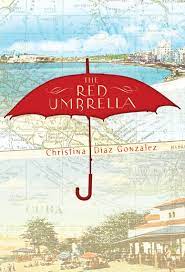
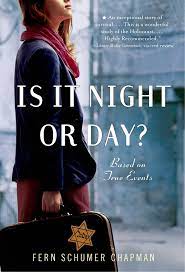
I put these two together because they tackle similar themes in what is a sadly repeating pattern in history. Governments forcing their people to flee. The former in Communist Cuba, the latter in Nazi Germany. Both girls must watch the first rumblings of change and terror as pro-Communist forces begin to interrogate and kill those who are not in favor of the regime, while Nazis start their anti-Jewish rhetoric, and their families knowing where the wind blows decide to send them to foster families America. They have to contend with a foreign language, forced assimilation, all while fearing for the worst for their families left behind and the country they loved even though it has changed so much. Though they are middle-grade books, they still touch or at least hint to the atrocities being committed abroad and the distinct isolation/depression/ PSTD that comes being in this situation. Both provide reader’s guides and Is it Night or Day tells the inspirational true story that is behind the book.
Refugee by Alan Gatz
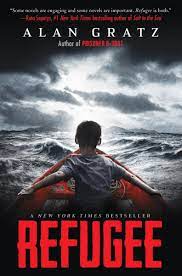
This book combines the two events, 1940s Germany, and a latter uprising in 1990s Cuba to 2010 Syrian refugee crisis with a unique but little known connections to all three situations through the vast space of time. But emphasizing the horror yet heartbreaking resilience of these people as they overcome seeming insurmountable obstacles in order to find a safer land.
The Other Einstein by Marie Benedict
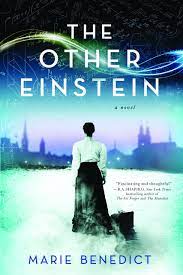
Yes, Einstein created the theory of relativity, I am actually not sure what it means and how E=mc relates but did you know his wife was a noted scientist in her own right. Mileva Maric was one of the few female students in Zurich’s top colleges, outwriting and outperforming the men in physics calculations. It’s there where she met her future husband, but her story does not end here as many seem to forget. In this fictionalized account, the author chooses to follow the unsubstantiated claims that she helped Einstein with his theory, performining calculations, theorizing etc. etc. While we don’t know if it happened that way, it does prove the point that Mileva didn’t just stop working or doing science after she got married and pregnant. It explores the tribulations of their marriage, which quickly overshadow how much they intellectually bonded. It reveals some of Einstein’s less pleasant personality quirks, his egoism and his flactuating feelings. It delves into the difficulty of breaking into the field in this time period and the at times, isolating life.
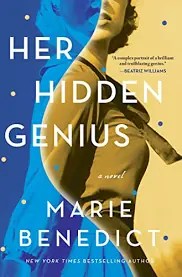
Marie Benedict also recently wrote about another female scientist whose work was largely miscredited until recently, Rosalind Franklin. She was the real photgrapher and founder of the DNA helix, but due to her sex, her rival conspired to give her work away to Francis Crick and Dalton rather than let her be known for her achievement. I felt a bit that the book overemphasized how her love life suffered. At least in part one. But it also tackles the isolationism, sexism and determination Rosalind went through to deliver the best work she could do because science was worth it.
 Rachel Reads & Reviews
Leave a comment